
TECoSA has welcomed seven new postdoctoral researchers to the center. In this interview series, we will introduce the talented researchers joining our community and explore the innovative work they are pursuing. This interview features Diletta Olliaro.
Hi Diletta, what were you doing before signing up as a post doc at TECoSA/KTH?
I was a Postdoctoral Fellow at Ca’ Foscari University of Venice, where I worked within SERICS, a research program funded by the National Recovery and Resilience Plan (PNRR) on cybersecurity and digital rights with a research focus on Quantitative Models for the Study of Software System Security.
What does your research focus on?
My research focuses on developing mathematical and stochastic models, mostly based on queueing theory, to gain behavioural insights and to model and optimize the performance of modern computing, networking, and telecommunication systems.
What challenges does your research address/what problem does it solve?
As AI applications increasingly move from centralized cloud infrastructures to edge devices, it becomes more challenging to guarantee fast response times, efficient resource usage, and reliable operation. My research aims to develop quantitative models that help predict and understand system behavior and guide the design of scheduling and resource-management strategies that make these systems more efficient, scalable, and sustainable.
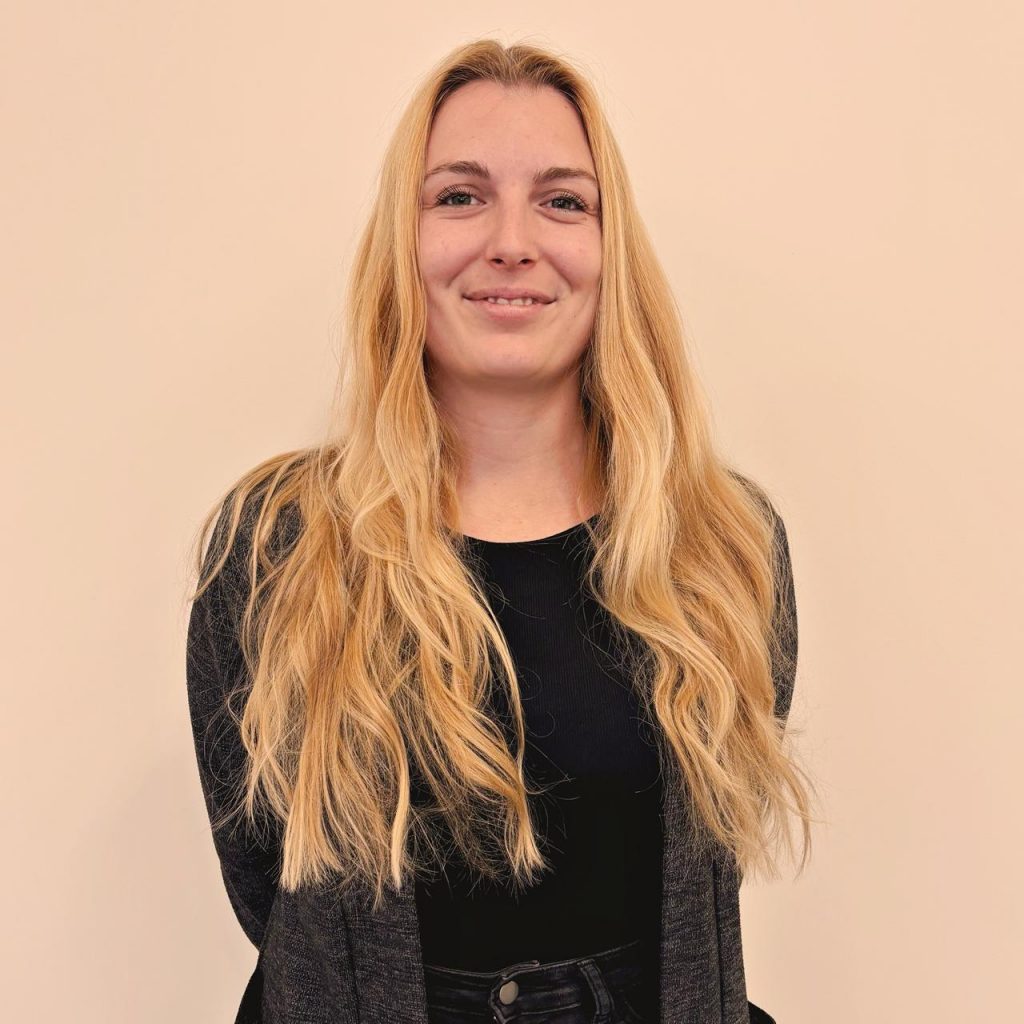
I find it rewarding to making complex systems more efficient, reliable, and sustainable, says Diletta Olliaro.
What makes this field particularly exciting to you?
It is the opportunity to combine rigorous mathematical theory with real-world technological challenges. The systems we use every day are becoming increasingly complex and energy-hungry, and I find it very rewarding to contribute, even in a small way, to making them more efficient, reliable, and sustainable.
What do you look forward to the most during this period as a Postdoc?
I am looking forward to collaborating with researchers and industry partners within TECoSA and exploring new research directions that translate theoretical insights from performance modeling into solutions with practical impact. For me, this is also a unique opportunity to be part of KTH, and of the Network and Systems Engineering (NSE) department in particular, not only because of its outstanding research environment, but also because I can learn from incredibly skilled and experienced professors and interact with exceptionally talented students and colleagues every day.
Do you have an unusual talent you have that most people don’t know about?
Languages! Before studying Computer Science at university, I mainly studied languages and learnt Spanish and French. I’ve kept that interest ever since and I still enjoy trying to pick up new languages, as I feel it is a great way to also connect with different cultures and ways of thinking.